How to Choose a Website Development Company in India: 15 Questions to Ask Before You Pay

Search for "website development company" and you will find hundreds of names. Every one of them says it is the best. Every one has a polished homepage, happy client logos, and a contact form promising a reply "within minutes".
So how do you actually choose? Most business owners pick on price, or on whoever replies first, or on a friend's suggestion. Sometimes that works. Often it ends in a slow website, a developer who stops answering calls, or a domain that is registered in someone else's name.
This guide gives you a simple system. It covers the 15 questions to ask before you pay any advance, the answers that should make you walk away, how to compare quotes fairly, and what a good agreement should include. We are RankDigi. We have been building websites for 15 years, and we wrote this list from the questions we wish every client had asked their previous developer.
First, Know What You Need
Before you talk to any company, spend twenty minutes answering three questions for yourself. It will save you hours later, and it will make every quote you receive easier to compare.
- What should the website do for your business? Bring enquiries, sell products online, take bookings, or simply look credible when people search your name. Each goal needs a different kind of site.
- Which pages do you need? Write a rough list: Home, About, one page per service, Gallery, Contact, and so on. A list of pages is the single most useful thing you can send to a developer.
- What is your budget range? You do not need an exact figure. A range such as "₹15,000 to ₹30,000" helps a good company suggest the right option instead of guessing.
If you are not sure about budget, our guide on how much a business website costs in India explains the typical price bands and what you get in each.
Company, Agency or Freelancer: Does It Matter?
You will meet three kinds of sellers. A large agency has a team of designers, developers, and project managers. A small studio has a few people, often led by an experienced founder. A freelancer works alone.
None of these is automatically better. A large agency is useful for big, complex projects with many stakeholders. A small studio or senior freelancer is often the best value for small and medium businesses, because you talk directly to the person who builds your site. A beginner freelancer is the cheapest, but also the riskiest.
What matters far more than the label is how they answer the questions below. We compared these options in more detail in our article on Fiverr vs a local web developer.
The 15 Questions to Ask a Website Development Company
Ask these in your first call or by email. A good company will be happy to answer all of them clearly. If someone gets irritated by honest questions before you have paid, imagine how they will behave after.

Experience and past work
1. Can you show me three websites you built for businesses like mine?
Not screenshots. Live links. Open them on your phone, because that is how most of your customers will see your site. Check whether they load quickly, whether the text is easy to read, and whether the contact buttons work. A company that cannot share any live work is a big risk.
2. Who will actually build my website?
Many companies have a confident salesperson who hands your project to a junior developer you never meet, or to a subcontractor elsewhere. Ask who designs it, who codes it, and who you will talk to during the project. You want a named person, not "our team".
3. How long have you been doing this, and which platforms do you use?
Experience matters because the hard parts of a website are not visible on day one: speed, security, search engine setup, and how the site behaves after a year of updates. Also ask which platform they recommend for you, and why. A good answer explains the trade-off. A weak answer is "we only do WordPress" or "we only do custom code" for every client.
Ownership and control
4. Will the domain and hosting be registered in my name?
This is the most important question on the list. Your domain is your address on the internet. If it is registered in the developer's account and they disappear, your website and your email can disappear with them. Insist that the domain and hosting are bought with your email address, even if the developer sets them up for you.
5. Will I get the admin login and all the files when the project ends?
You should receive full admin access, the hosting login, and a copy of the website files. Some companies keep the admin login "for safety". That is a polite way of making you dependent on them.
6. Are the themes, plugins, and images properly licensed?
Cheap websites often use pirated "nulled" themes and plugins. These can contain hidden code that injects spam or steals data, and they never get security updates. Images copied from Google can bring a copyright notice. Ask directly, and ask for the licences to be in your name where possible.
Process and scope
7. What exactly is included in the price?
Ask for a written list: number of pages, features, number of design revisions, content entry, contact forms, WhatsApp button, basic SEO setup, speed optimisation, and training. "Complete website" is not a scope. A list is.
8. What is not included, and what would it cost?
This question uncovers hidden costs early. Common extras are content writing, logo design, extra pages, payment gateway setup, premium plugins, and changes after launch. A good company tells you upfront. A risky one tells you after you have paid half.
9. What is the timeline, and what do you need from me?
A typical small business website takes two to four weeks. But delays usually happen because content is not ready. A good company will tell you exactly what they need from you and by when. Our guide on how long it takes to build a website explains a realistic schedule.
10. How will you make the website fast and mobile-friendly?
Every company says "fully responsive". Ask how they test it. Do they check real phones? Do they compress images? Do they measure the page speed before launch? A specific answer shows real practice. A vague answer shows a template.
11. What SEO work is included?
At a minimum, every page should have its own title and description, clean web addresses, proper headings, image descriptions, a sitemap, and a Google Search Console setup. Full SEO campaigns are a separate service, but the basics should be built in. If a company promises "page one on Google in 30 days", be careful. Nobody can honestly guarantee that.
Payment and support
12. How do you take payment?
A fair structure is an advance of 30 to 50 percent, with the rest on completion or in stages. Paying 100 percent upfront to someone you have just met is risky. Paying nothing upfront is also unusual, because it means the company has no commitment from you either.
13. What happens if I am not happy with the design?
Ask how many revision rounds are included, and what happens if the first design is completely wrong. A good company shows you a design or a draft early, before building everything, so changes are cheap.
14. What support do I get after launch?
Small issues appear in the first few weeks: a form email going to spam, a photo that looks stretched on one phone, a typo someone notices. A free support period of at least two to four weeks is reasonable. After that, ask about maintenance plans and their monthly cost.
15. Will you teach me how to update the website myself?
You should be able to change text, swap photos, and publish a blog post without paying someone each time. A short training session or a recorded video is a sign that the company wants you to be independent.
Red Flags That Should Make You Walk Away
Some warning signs are easy to spot once you know them. If you see two or more of these, keep looking.
- No live examples. Only mockups, screenshots, or "our work is confidential".
- A price far below everyone else. A full business website for ₹2,999 usually means a reused template, pirated plugins, or a seller who plans to charge you later.
- Guaranteed rankings. "Top 3 on Google guaranteed" is a sales line, not a promise anyone can keep.
- Pressure to decide today. "This offer ends tonight" is a tactic, not a reason.
- The domain in their name. Or vague answers about who owns what.
- No written scope. Everything is agreed on a call and nothing is written down.
- Slow, unclear communication before you pay. It only gets worse after.
Green Flags That Show You Have Found a Good Company
- They ask about your business first. Your customers, your services, and what a good enquiry looks like, before talking about colours and fonts.
- They suggest a simpler option when it fits. An honest company will sometimes tell you that you need less than you think.
- Clear written quote. Pages, features, timeline, payment terms, and what is excluded.
- Live work you can test. Real websites that load fast on your phone.
- Ownership in your name. Domain, hosting, and admin access, without you having to fight for them.
- Reachable people. You know who you are talking to, and they reply in reasonable time.

How to Compare Quotes Fairly
Once you have three or four quotes, the temptation is to pick the cheapest. Before you do, put them side by side using the same yardstick.
- Count the pages. One quote might be for five pages, another for twelve. That alone can double the price.
- Compare the features. WhatsApp button, enquiry form, Google Map, blog, booking, payment gateway. Mark which quote includes which.
- Check content. Is the company writing the text, or are you? Writing ten pages of good content is real work.
- Look at speed and SEO setup. If one quote mentions page speed and basic SEO and another does not, they are not the same product.
- Add the yearly costs. Domain, hosting, premium plugins, and maintenance. A cheap build with an expensive yearly lock-in is not cheap.
- Weigh the support. One month of free support has real value when small problems appear.
After this exercise, the "expensive" quote often turns out to be the better deal, and the cheapest one often turns out to be missing half the work. For real price ranges by city and seller type, see our guide to website design cost in Delhi, which applies to most Indian cities.
What a Good Website Agreement Includes
You do not need a long legal contract for a small business website. But you do need the key points in writing, even if it is a clear email or a one-page document. Make sure it covers:
- The list of pages and features
- The number of design revisions
- Who provides the content and photos
- The timeline, with what you need to provide and when
- The total price, the advance, and when the rest is due
- Who owns the domain, hosting, design, and files after payment
- The free support period after launch
- The cost of extra work, such as additional pages, so there are no surprises
Questions About Redesigns and Existing Websites
If you already have a website and want to replace it, add two more questions to the list.
- "How will you protect my current Google rankings?" A redesign that changes page addresses without redirects can wipe out traffic you spent years building. Our redesign checklist explains what a careful developer does.
- "Can you fix my current site instead of rebuilding it?" Sometimes the honest answer is yes. A slow site often needs speed optimization, not a full rebuild.
A Simple Scoring Method
If you are torn between two or three companies, score each one from 1 to 5 on these six points, then add up the totals:
- Quality of live past work on your phone
- Clarity of the written quote
- Ownership terms (domain, hosting, files)
- Speed and clarity of communication so far
- Support after launch
- Price for what is actually included
Notice that price is only one point out of six. In our experience, the companies that score well on the first five rarely turn out to be the expensive choice in the long run, because you do not pay twice.
How RankDigi Answers These 15 Questions
It is only fair that we answer our own checklist. Here is how we work.
- Who builds it: Deepak Maurya, the founder, with 15 years of experience in web design and development, is involved in every project. You talk to the person who builds your site.
- Past work: live websites you can open on your phone, in our portfolio, including the Nanhe Kadam IVF Centre clinic website and the RD Trend online store.
- Ownership: the domain and hosting are always in your name, and you get full admin access.
- Licences: genuine, licensed themes and plugins only.
- Scope: a clear written quote with pages, features, timeline, and price.
- Prices: a business website starts at ₹7,999, a landing page at ₹4,999, and an e-commerce website at ₹19,999. The full list is on our services page.
- After launch: training, a support period, and optional maintenance plans from ₹1,999 a month.
And if a simpler option would do the job for you, we will say so.

Frequently Asked Questions
How do I know if a website development company is genuine?
Ask for live links to their past work, check that the business has a real address and phone number, look for reviews on Google or other platforms, and see whether they give you a written quote. Genuine companies are comfortable with questions.
Should I choose a local company or one in another city?
Most website projects today are handled entirely over calls, WhatsApp, and email. A local company is helpful if you prefer meeting in person. Otherwise, choose on quality, communication, and terms, not distance.
How much advance should I pay?
Usually 30 to 50 percent. Avoid paying the full amount before any work is shown, especially to someone new.
Is the cheapest quote ever the right choice?
Sometimes, if it genuinely includes everything you need and the company passes the checklist above. But very low prices usually mean something is missing: content, speed work, licences, or support.
What should I do if my current developer stops responding?
First, check who owns your domain and hosting. If they are in your name, another developer can take over. If they are not, contact the domain registrar and hosting company with proof of your business identity. This is exactly why question 4 matters so much.
Ask Us the 15 Questions
The best way to test any company is to ask the questions above and see how they respond. You are welcome to ask us all fifteen. Tell us about your business and the pages you need, and we will reply with clear answers and a fixed quote in writing, usually within one working day.
Request your free website quote, or see what is included in our business website service.
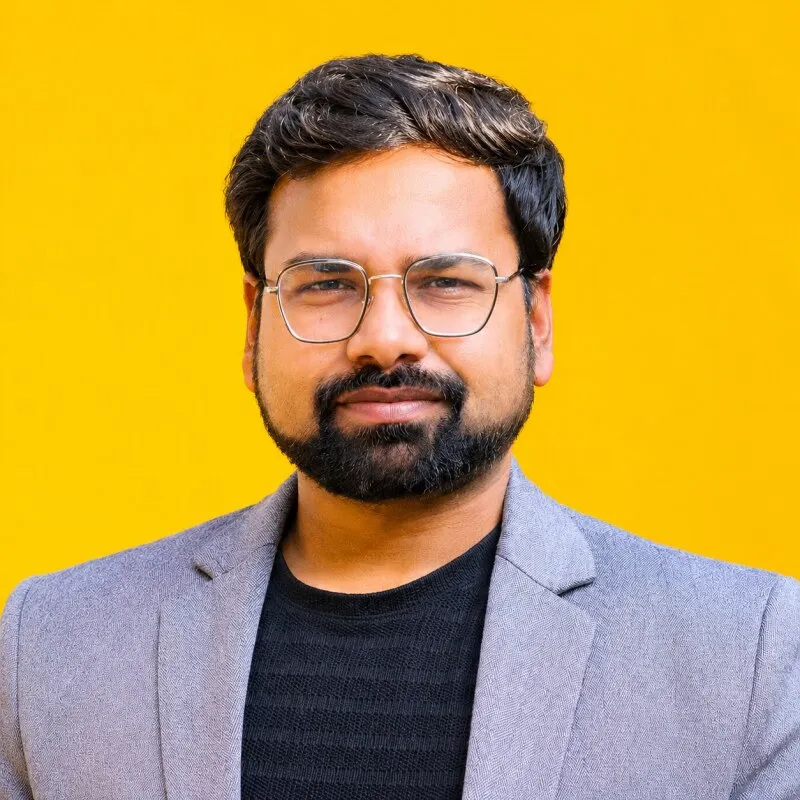
Deepak Maurya
Founder & Proprietor, RankDigi
15 years of experience building websites and web applications — from WordPress and website builders to fully custom PHP/Laravel development. Also builds and sells web development services on Fiverr as @deepakmaurya91.
More about Deepak →